.jpg)
“You can’t wear that.”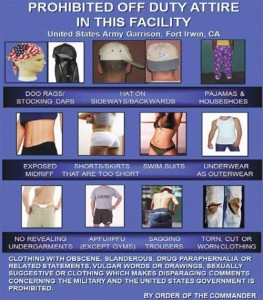
“What do you mean I can’t wear this?” I told my husband. We were recently married and living in Yuma, Arizona. It was a Sunday afternoon nearly 10 years ago and I remember it like it was yesterday. It was my first experience with the dress code that exists for service members, dependents and their guests at military installations.
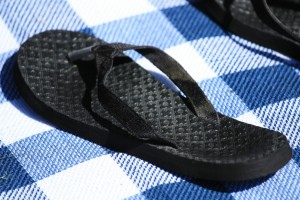
I was wearing a tank top, shorts and sandals. Apparently I wasn’t dressed appropriately for our planned trip to Marine Corps Air Station Yuma’s commissary. My husband looked me up and down and told me I was wearing “workout gear” and “shower shoes.”
“Shower shoes,” I scoffed.
Clearly I was not wearing shower shoes and I was wearing a tank top because it was more than 90 degrees outside. But being a new military spouse, I changed before heading to the base. Once we walked through the sliding glass doors at the military commissary, my husband pointed to the dress code policy sign. One question popped into my head.
Does this dress code apply to military spouses?
The short answer is yes. The dress code applies to military spouses and anyone else with base access, including dependents, retirees, civilian employees, contractors and civilian guests.
Is the dress code enforced? What’s the penalty for breaking the dress code?
Here’s where it gets complicated. At every U.S. military installation around the world, there is a dress code for the commissary, exchange and gas station. The dress code is an order that is normally posted near the front doors of these base businesses. The poster explains that civilian clothing must fit properly (not too tight, not too loose) and that patrons are prohibited from wearing pajamas, athletic shorts, swimsuits and spandex-type gym attire.
The dress code at the commissary applies to service members, their dependents and guests.
If you break the dress code, a service member who is tasked with “policing their own,” will point out that you are inappropriately dressed and deny you access to that facility. This happened to a Navy spouse after a Marine said her 7-year-old son was wearing workout gear to the commissary in Kaneohe Bay. They were refused admission. After her son changed his shorts, the two returned to the commissary to buy their milk.
One important piece to decoding the dress code: The dress code isn’t the commissary’s policy.
It’s the installation commanders who order and choose to enforce or not enforce the dress code. That’s why a service member, not a commissary manager, is the person publicly pointing out your noncompliant attire. It’s the reason why dress code enforcement is inconsistent among military installation and even among different military branches. It’s also the reason I dress up to pump gas at a Marine Corps gas station, but never sweat my wardrobe at an Air Force commissary.